Outsourced yard management has become a competitive necessity for high-volume logistics hubs losing thousands of dollars daily to gate congestion, misplaced trailers, and driver detention fees.
Traditional, in-house yard management frequently fails under the pressure of rapid scaling and unpredictable supply chain disruptions. Forward-thinking enterprise operations now outsource these operations to specialized logistics partners to capture immediate efficiency gains, protect tight margins, and leverage dedicated assets.
| Operational Challenge | In-House Management Reality | Outsourced Yard Management Advantage |
| Driver Detention Fees | High risk due to slow trailer turns | Guaranteed turn times via dedicated spotters |
| Asset Tracking | Manual logs and gate chaos | Real-time digital tracking and visibility |
| Labor Scalability | Difficult hiring and high turnover | Scalable, fully managed professional crew |
| Equipment Maintenance | Capital expenditure and unexpected downtime | Vendor-provided, well-maintained switcher trucks |
Why Are Yard Management Systems Failing Today?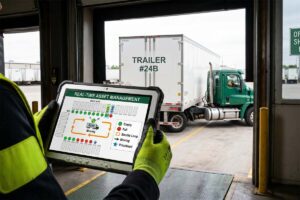
Traditional internal yard oversight fails because modern supply chains demand extreme speed and precision that generalized warehouse staff cannot provide. Manual trailer tracking and fragmented communication create instant bottlenecks at the gate, stalling the entire inventory pipeline and compounding detention penalties.
Enterprise shipping hubs operate on razor-thin schedules. When a facility relies on manual yard checks, yard jockeys waste hours searching for specific containers. This chaos cascades into the warehouse, leaving cross-docking teams idle and outbound trucks waiting. By shifting to outsourced yard management, logistics managers hand these headaches to dedicated specialists who utilize structured gate protocols and purpose-built software.
When internal personnel attempt to manage complex yard logistics, they encounter massive operational friction. Warehouse workers trained for picking and packing lack the specialized skills required for rapid yard maneuvers. Yard inventory visibility degrades rapidly when relying on paper logs or outdated spreadsheets. A single misplaced trailer can delay an entire production line, costing thousands of dollars per hour in idle labor.
Private fleets of switcher trucks require significant capital and maintenance management. In-house operations often suffer when a key spotter truck breaks down, leaving the facility without a backup asset. This mechanical vulnerability directly limits a facility’s ability to keep pace with arriving freight carriers.
Third-party logistics experts eliminate these operational vulnerabilities entirely. They bring proprietary technology, structured asset tracking workflows, and reliable backup equipment. This professional layer ensures that incoming freight moves from the gate house to the dock door without a single minute of wasted time or human error.
How Does Outsourcing Improve Trailer Spotting Efficiency?
Outsourcing improves trailer spotting efficiency by deploying dedicated switcher drivers and optimized tracking systems that eliminate deadhead movement. Professional spotters focus entirely on rapid trailer placement, ensuring that warehouse bay doors always stay productive and asset utilization remains high.
- Dedicated spotting crews work in direct synchronization with warehouse management systems to anticipate moves.
- Specialized spotter trucks reduce fuel consumption and movement times compared to using road tractors for yard maneuvers.
- Real-time communication channels prevent communication gaps between the gate house, the yard, and the dock doors.
- Advanced yard jockey training minimizes the risk of on-site accidents and costly property damage.
Inefficient spotting directly throttles warehouse throughput. When warehouse doors sit empty because an internal driver is tracking down a chassis, money burns. Utilizing outsourced yard management model ensures that trained operators move assets safely and swiftly, slashing hostler response times down to minutes.
Consider the physical reality of a chaotic yard. Road drivers drop trailers haphazardly when gate personnel are overwhelmed. Third-party spotting teams prevent this by taking absolute control of the pavement. They choreograph every single movement based on real-time warehouse demand, ensuring that high-priority loads move to the front of the queue automatically.
This level of efficiency requires dedicated focus. Internal warehouse employees juggle multiple responsibilities, meaning yard management services constantly get treated as a secondary priority. Specialized spotters have one single job: keep the trailers moving. This specialization translates into faster turn times, happier road drivers, and maximum dock door utilization day after day.
What Role Do Dedicated Shuttle Services Play in Yard Optimization?
Dedicated shuttle services optimize yards by establishing a continuous, predictable flow of inventory between off-site storage yards and the main production facility. This steady loop prevents on-site trailer congestion, frees up valuable dock space, and ensures just-in-time inventory availability.
- Shuttle drivers maintain a rigorous schedule to match the exact tactical needs of the manufacturing or fulfillment floors.
- Off-site staging yards absorb excess container volume during peak seasons without choking the main facility lanes.
- Continuous drop-and-hook operations maximize the productivity of over-the-road drivers entering the property.
- Dedicated shuttle assets eliminate the need to rely on unpredictable, expensive spot-market local carriers.
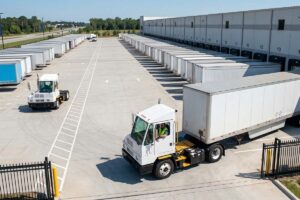
High-volume facilities rarely have enough physical space to store every arriving trailer during peak demand surges. Integrating dedicated spotting solutions allows a plant to seamlessly extend its footprint to secondary yards, using dedicated shuttles as a flexible pipeline to feed the primary asset.
When an enterprise hub runs out of physical space, operations grind to a halt. Inbound trucks back up onto local roads, drawing fines from local municipalities and creating massive safety hazards. Dedicated shuttles act as a safety valve, pulling overflowing inventory away from the main building to a secure secondary location until the warehouse is ready to process it.
This continuous transportation loop requires flawless execution. Third-party providers manage the drivers, the equipment, and the scheduling to ensure that the shuttle loop never stops. This guarantees that manufacturing lines never starve for raw materials, even when the primary yard is completely maxed out.
 How Long Does It Take to See a Return on Investment?
Facilities typically realize a measurable return on investment within the first thirty to sixty days following transition. The financial recovery stems from the immediate elimination of carrier detention fees, reduced internal labor overhead, and a sharp increase in daily dock door velocity.
Consider a facility facing ten driver detention charges weekly at eighty dollars per hour. That leaks cash quickly. Specialized outsourced yard management eliminates the friction points that cause carriers to wait, instantly erasing those penalties from the balance sheet while boosting overall facility throughput.
Beyond detention savings, outsourcing transforms fixed operational costs into variable expenses. Instead of maintaining a costly internal team with benefits, payroll taxes, and overhead during slow months, facilities pay for the exact level of logistics service they require. This structural financial shift protects corporate margins during economic downturns.
Additional savings accumulate from reduced equipment liabilities. Switcher trucks are expensive to buy and maintain. When a logistics partner provides the fleet, the facility avoids heavy capital expenditures and unpredictable repair bills. The partner absorbs all equipment depreciation and maintenance costs, presenting a clean, predictable line-item cost to the client.
The boost in warehouse velocity creates a powerful compounding financial benefit. When yards operate flawlessly, warehouses process more freight per shift. This increased capacity allows companies to scale up fulfillment volumes and generate more revenue without expanding their physical facility footprint.
Frequently Asked Questions
What exactly does 3PL yard management outsourcing include?
It includes trained yard jockey labor, switcher trucks, gate management personnel, asset tracking technology, and dedicated shuttle operations tailored to your specific facility layout. The service covers everything required to keep freight moving efficiently outside the four walls of your warehouse.
How do third-party spotters handle peak season volume spikes?
Logistics partners maintain a deep pool of certified drivers and additional switcher assets, allowing them to scale resources up or down rapidly without the client needing to hire full-time staff. This operational flexibility protects your facility from peak-season bottlenecks.
Will outsourcing cause communication gaps with our warehouse team?
No, professional yard providers integrate their communication workflows directly with your existing warehouse management systems to ensure seamless coordination between the yard and dock doors. Real-time visibility ensures that yard drivers and warehouse workers act as a unified team.
What safety standards do outsourced yard drivers follow?
Reputable logistics partners enforce strict, OSHA-compliant safety protocols, conduct regular drug screenings, and provide extensive yard-specific maneuver training to prevent costly property damage. This professional focus sharply reduces workplace accidents and asset damage.
Contact us for an estimate at the Nolan Logistics contact page. Call Nolan Logistics at (812) 282-7556 to optimize your yard operations today.