Every minute a truck sits idle in your yard costs money. Detention fees accumulate, dock workers stand around waiting, and carriers start routing their capacity to facilities that run tighter operations. For most distribution centers, the yard itself — not the warehouse floor — is where schedules fall apart.
Effective distribution center yard management changes that equation. By synchronizing gate check-ins with dock door availability and giving yard spotters real-time visibility into every trailer on the property, facilities eliminate the bottlenecks that turn a manageable Tuesday into a logistical crisis. The result is faster truck turns, lower detention costs, and a yard that works with your warehouse instead of against it.
How do logistics teams optimize distribution center yard management?
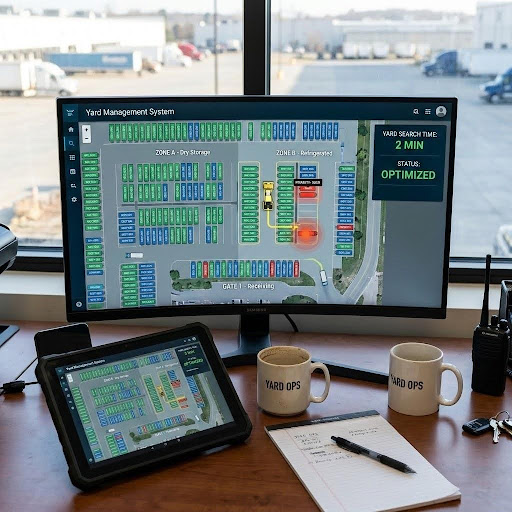
Effective distribution center yard management utilizes real-time tracking and automated scheduling to eliminate trailer dwell time. These systems assign specific parking slots for inbound freight based on dock door proximity and unloading priority.
By replacing manual clipboards with digital visibility, facilities reduce search times for yard spotters and prevent detention fees. Proper management creates a seamless handoff between over-the-road drivers and the warehouse receiving team.
How Real-Time Visibility Drives Distribution Center Yard Management Efficiency
The lack of real-time data causes most delays at the gate. If a spotter does not know which trailer contains the rush order, that freight sits in the yard while dock workers remain idle. High-visibility systems change this dynamic by providing a live map of every asset on the property.
| Category | Value | Notes |
| Average Spotter Search Time | 12 Minutes | Manual tracking without digital maps |
| Optimized Search Time | 2 Minutes | Using GPS or RFID asset tagging |
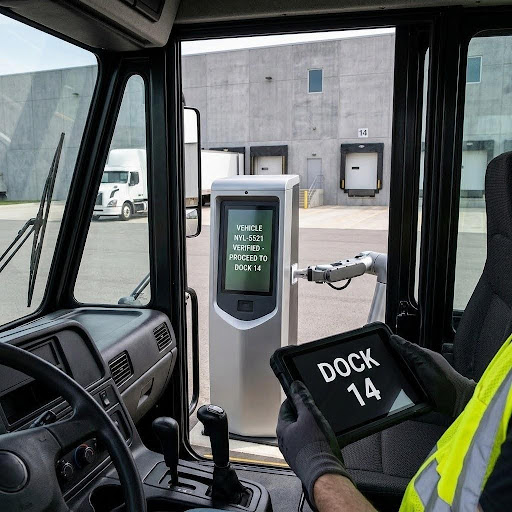
| Gate Check In Time | 90 Seconds | Automated kiosk vs manual paper logs |
When spotters have exact coordinates for a trailer, they move more units per hour. This speed prevents backups at the entrance that often spill out onto public roads. We see the best results when the yard team and the warehouse manager look at the same digital dashboard. This coordination ensures that trailers are staged before the warehouse crew is even ready to start the next shift.
Reducing Detention Costs and Driver Frustration
Carrier relationships suffer when drivers wait for hours to drop a load. Most carriers charge detention fees after two hours of waiting. These costs add up quickly.
How to increase efficiency:
– Implement automated gate systems to reduce entry friction.
– Use pre-scheduled appointments to balance the daily workload.
– Prioritize trailer moves based on expiration dates or customer deadlines.
– Audit yard capacity daily to prevent gridlock during peak seasons.
If the gate is backed up, then the entire schedule for the day fails. We focus on getting drivers in and out within 30 minutes. This efficiency makes your facility a preferred stop for carriers, which is vital when truck capacity is tight.
Solving the Key Problem in Yard Logistics
Efficiency is not just about speed; it is about the bottom line. Yard labor typically accounts for a significant portion of facility overhead. Inefficient spotting leads to unnecessary fuel burn and wear on yard tractors.
If a facility handles 100 trailers a day, then saving five minutes per move equals over eight hours of labor saved daily. At an average labor rate of 25 dollars per hour, this adds up to $73,000 in annual savings. These figures do not even include the reduction in fuel costs or the avoidance of carrier detention penalties, which can range from $50 to $100 per hour.
Enhancing Safety Through Organized Movements
A chaotic yard is a dangerous yard. When drivers are frustrated or in a rush, the risk of accidents increases. Organized distribution center yard management establishes clear traffic patterns and designated pedestrian zones.
Example ways to increase safety:
1. Directional Signage: Create one-way loops to prevent head-on encounters.
2. Designated Staging: Keep loaded trailers separate from empty equipment.
3. Speed Governance: Enforce 10 mph limits for all vehicles onsite.
4. Standardized Communication: Use radios or tablets for all move requests.
5. Regular Pavement Maintenance: Fix potholes to prevent cargo damage during moves.
If the yard is organized, then the risk of a trailer being lost or buried behind other equipment disappears. This order allows the team to focus on safety rather than just trying to find missing freight.
How Distribution Center Yard Management Integrates with Your WMS
The yard should function as an extension of your warehouse, not a separate operation that runs on radio calls and gut instinct. If your warehouse management system cannot communicate with your yard system, you are operating with a blind spot that shows up as missed moves, staging errors, and dock doors sitting empty while the right trailer is parked three rows away.
When the two systems are properly integrated, the WMS drives yard activity automatically. A dock door closes, a shipment is processed, and the system immediately queues the next trailer move without anyone picking up a phone. The yard spotter gets a notification on their tablet and executes the move. No paperwork, no back-and-forth with the office, no delays waiting for someone to manually update a spreadsheet.
The bigger benefit is visibility. When the WMS and yard system share data, your office team can see the full shipment lifecycle from gate check-in to dock unload in one place.
That visibility is what allows managers to make real decisions instead of educated guesses about where a load is and when it will be ready.
Improving Yard Throughput During Peak Seasons
During the holidays or promotional events, trailer volume can double. Without a plan, the yard will reach capacity and lock up.
Additional suggestions:
– Identify overflow lots within a 5-mile radius for long-term storage.
– Increase spotter staffing 2 weeks before the projected volume spike.
– Audit all “dead” trailers that have been sitting for over 30 days.
– Cross-train warehouse staff on gate procedures to help during rushes.
Managing the flow during these times requires aggressive communication. If the warehouse cannot keep up with the unloading pace, the gate must slow down the intake of new arrivals. This prevents a “parking lot” scenario where no one can move.
Technical Tradeoffs of Different Tracking Methods
Choosing how to track assets involves various tradeoffs. Some facilities use passive RFID tags. Others use active GPS units.
If you choose a manual paper system, then the initial cost is zero but the labor cost is high. If you choose a fully automated system, the upfront investment is high but the long-term ROI is significant. Most medium-sized facilities find a middle ground with a software-based app that spotters use on ruggedized tablets.
Data-Driven Decision Making
Every move in the yard generates a data point. Analyzing these points helps identify hidden problems. You might find that a specific carrier is always late or that a certain dock door is harder to back into than others.
By looking at the data, we can adjust the schedule to fit reality. If unloading a refrigerated trailer always takes 20% longer than a dry van, we build that extra time into the appointment window. This level of detail keeps the flow moving consistently throughout the week.
Long-Term Supply Chain Benefits of Distribution Center Yard Management
Consistent yard management creates a predictable environment. Predictability is the key to scaling any logistics business. When the yard runs smoothly, the warehouse stays productive, drivers remain happy, and customers get their orders on time.
Distribution center yard management is often the unsung hero of the supply chain. It is the bridge between the road and the shelf. Investing in this area pays dividends in both operational efficiency and brand reputation.
Contact Nolan Logistics for Professional Support
Nolan Logistics provides comprehensive solutions for complex supply chain challenges. Our team understands the nuances of facility flow and yard optimization. If you need help refining your distribution center yard management or other logistics processes, we are ready to assist.
Struggling with yard congestion or rising detention costs? Nolan Logistics has helped facilities across the region streamline their yard operations. Contact us at (812) 282-7556 or visit our contact page to start the conversation.
We help you move freight faster and smarter.