A distribution center can have a great team, well-organized racking, and a full schedule, and still lose hours every day to trailers that are in the wrong place. The yard is easy to overlook because the work happens outside the building. When it slips, your docks feel it first.
Since 1982, we at Nolan Logistics have helped facilities across the Midwest and eastern states keep trailers moving. Here is how good yard management cuts delays, and what to know before you ask about cost.
| Without a Yard Plan | With Yard Management |
| Trailers wait for the right dock door | Trailers are placed at the right dock at the right time |
| Yard crews and dock teams work from different information | Yard, dock, and supervisors stay in clear communication |
| Staging areas fill up with no clear order | Staging follows your dock priorities |
| Short staffing slows trailer moves | Trained personnel focus on trailer movement |
| Congestion builds during peak demand | Steady flow helps reduce bottlenecks |
What Is Distribution Center Yard Management?
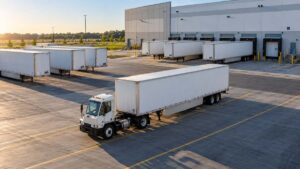
Yard management is the coordination of every trailer movement outside your building, from the yard to the dock door and back. The goal is simple: the right trailer in the right place at the right time. When that happens, docks stay busy, drivers spend less time waiting, and freight keeps moving on schedule.
Our yard management work centers on two services, trailer spotting and shuttle services. Both work within your existing processes, and each plan is matched to your site layout, volume, and communication practices.
Where Do Yard Delays Come From?
Most yard delays trace back to a few repeat problems. None looks dramatic on its own, but they add up across a shift.
– Trailers placed at the wrong door, or placed late
– Limited visibility into which trailers are ready, loaded, or waiting
– Not enough internal staff free to move trailers when needed
– Crowded staging areas with no clear order
– Handoff gaps between yard crews, dock teams, and supervisors
How Does Trailer Spotting Reduce Dock Delays?
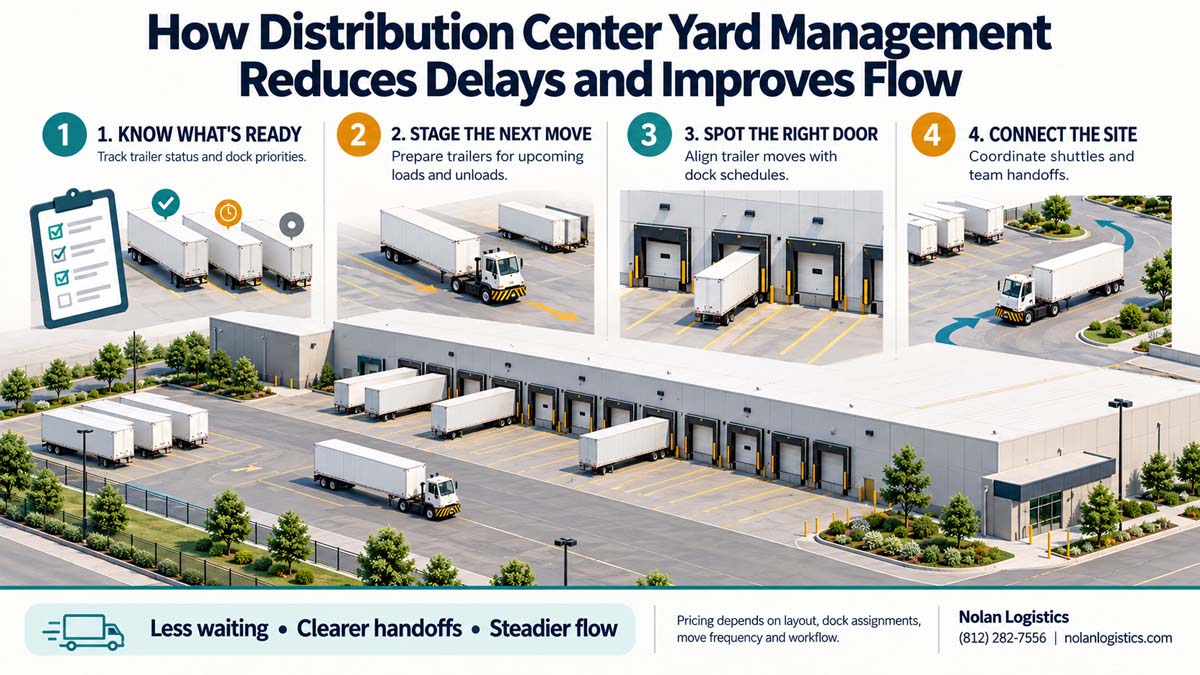
Trailer spotting puts trailers at the correct dock doors and stages the next ones in line, so your dock teams are never waiting on a trailer. Our spotters coordinate with your supervisors, dock staff, and yard personnel, and they adjust positions as priorities change during the shift.
Our spotting support can include:
– Placing trailers at designated dock doors
– Staging trailers for upcoming loads or unloads
– Adjusting trailer positions based on real-time priorities
– Supporting live load and drop-and-hook workflows
Facilities often ask about yard management services pricing for spotting before they commit. The answer depends on your site layout, dock assignments, and how often trailers need to move. We review those details first, then build a spotting plan around them.
How Do Shuttle Services Improve Flow Between Buildings?
Shuttle services move trailers between buildings, yards, docks, and satellite locations, so internal freight does not stall between steps.
– Moving trailers between buildings or staging areas
– Supporting internal trailer transfers for production or distribution needs
– Aligning trailer movement with dock schedules
– Coordinating with yard and dock teams for timely moves
When we plan shuttle support, we look at how often trailers move and how your teams communicate. Those same factors shape yard management services pricing for shuttle work, so a quick site review will tell you far more than a generic rate sheet.
Why Do Spotting and Shuttle Services Work Best Together?
Spotting handles the dock doors, and shuttle moves handle everything in between. When both run on the same schedule, trailers reach the dock ready to load or unload, and your dock team is not left waiting.
If dock turns are your biggest concern, start by asking about yard management services pricing for trailer spotting, then add shuttle support as your needs grow.
How Are Yard Management Services Usually Priced?
Yard management is usually priced in one of three ways: a flat rate, a per-trailer rate, or staffing hours. Which one fits depends on how steady your trailer volume is and how your yard runs from shift to shift.
– Flat rate. One set fee covers an agreed scope of work, such as dedicated coverage during set shifts. It is the easiest model to budget when volume is predictable.
– Per trailer or per move. You pay only for the moves that happen. It can suit volume that rises and falls, though costs climb quickly in peak periods.
– Staffing hours. You pay for trained yard personnel by the hour or shift, whether they are spotting trailers at the docks or shuttling them between buildings. It fits sites that need people on hand all shift.
No model is cheapest for everyone. Steady volume often favors a flat rate, while seasonal swings can favor paying by the move. That is why we look at your layout, dock assignments, and how often trailers move before we put a plan together.
 How Do You Get Started with a Yard Management Plan?
We keep the process simple, so support fits your site from day one:
– Site review: we learn your layout, dock structure, trailer flow, and communication expectations.
– Plan development: we outline how spotting or shuttle support should work, including dock priorities and scheduling.
– On-site integration: our team works within your established processes and adjusts to your daily rhythm.
Every facility is different, so the best way to learn about yard management services pricing is to send us your site details and request a custom shuttle plan.
Frequently Asked Questions
What types of facilities do you support?
We support distribution centers, warehouse campuses, manufacturing sites, and other environments with steady trailer activity. Each service plan is tailored to the facility’s layout and workflow.
Can you work within our existing yard processes?
Yes. Our teams follow your established procedures and communication practices. That way, trailer movements line up with what your operation already expects.
Do you support both live loads and drop trailers?
Yes. Our spotting personnel can support live load and drop-and-hook workflows, based on what your operation needs.
What information do you need to build a plan?
We typically review your site layout, dock assignments, how often trailers move, and your communication expectations. That gives us what we need to build a plan that fits.
Ready to talk about your yard? Call Nolan Logistics at (812) 282-7556 or visit us at 131 E Court Ave #200, Jeffersonville, Indiana 47130. You can also contact us online to request a custom plan. We serve the Midwest and eastern states.